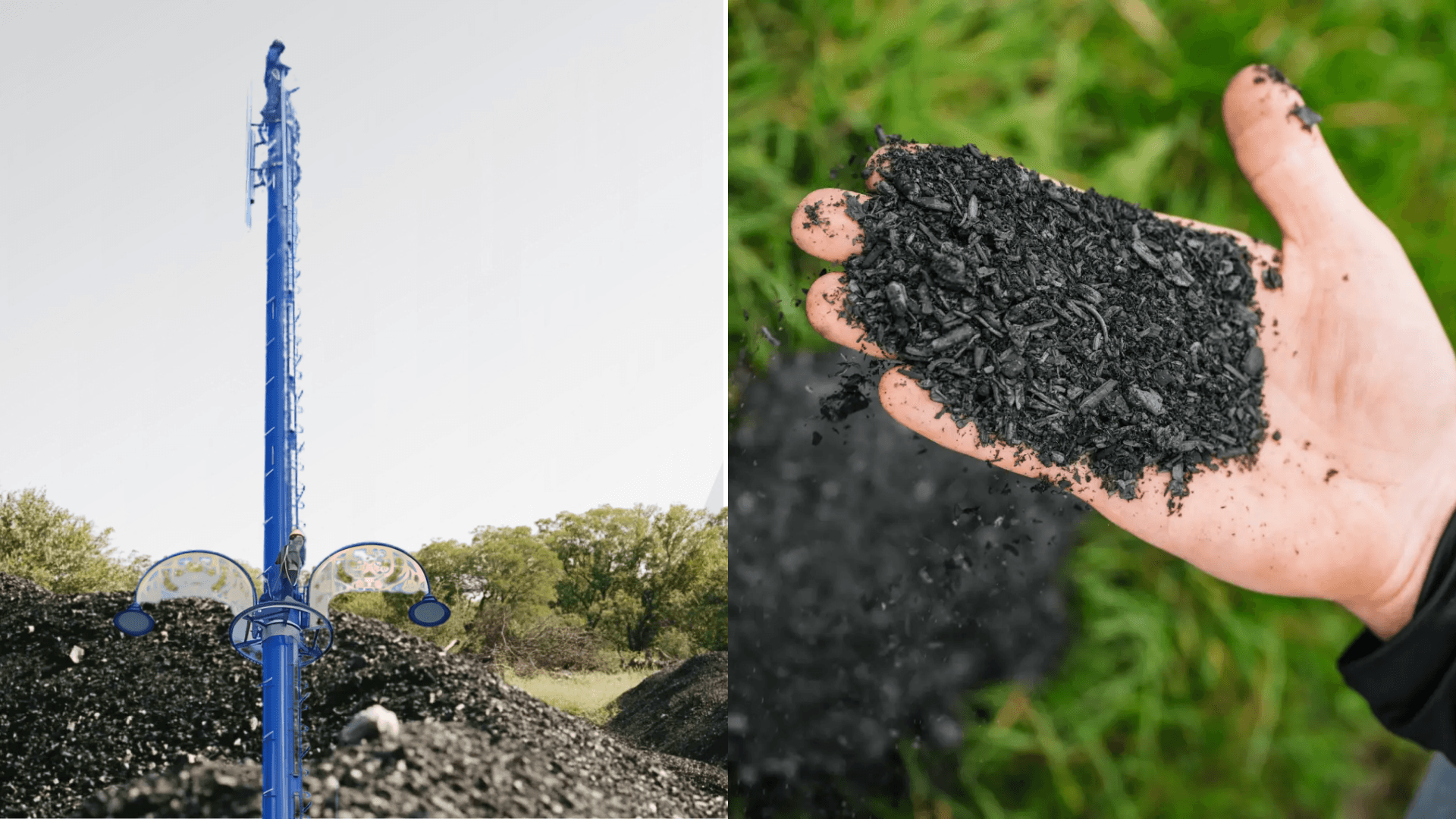
EDOTCO Unveils Biochar Pole: Building Sustainable Towers for a Carbon Neutral Future
In summary: EDOTCO has launched its first Biochar Pole. It uses palm-based biochar to cut carbon emissions and reduce how much cement the pole needs.
Connectivity is no longer a luxury. It is the backbone of modern life, powering how we learn, work, and connect to the people we love. From children in rural villages attending online classes to entrepreneurs building digital businesses in bustling cities, connectivity bridges the gap between opportunity and possibility.
Yet behind every tower that enables this connection lies a difficult question: what is the true cost of progress? For decades, cement and steel have formed the foundation of telecommunication infrastructure - strong and reliable, but heavy on environmental impact. Cement production alone contributes nearly eight percent of global carbon emissions, while steel adds further embedded carbon costs before a tower even goes live.
To address this, EDOTCO has introduced its first Biochar Pole — a new generation of sustainable telecommunications towers that use palm-based biochar to reduce carbon emissions and redefine how infrastructure can be built responsibly.
As demand for digital connectivity accelerates across Asia, EDOTCO’s Biochar Pole signals a shift in how the industry approaches growth: proving that the future of connectivity can be built sustainably, without compromising performance or progress.
Rethinking Traditional Infrastructure
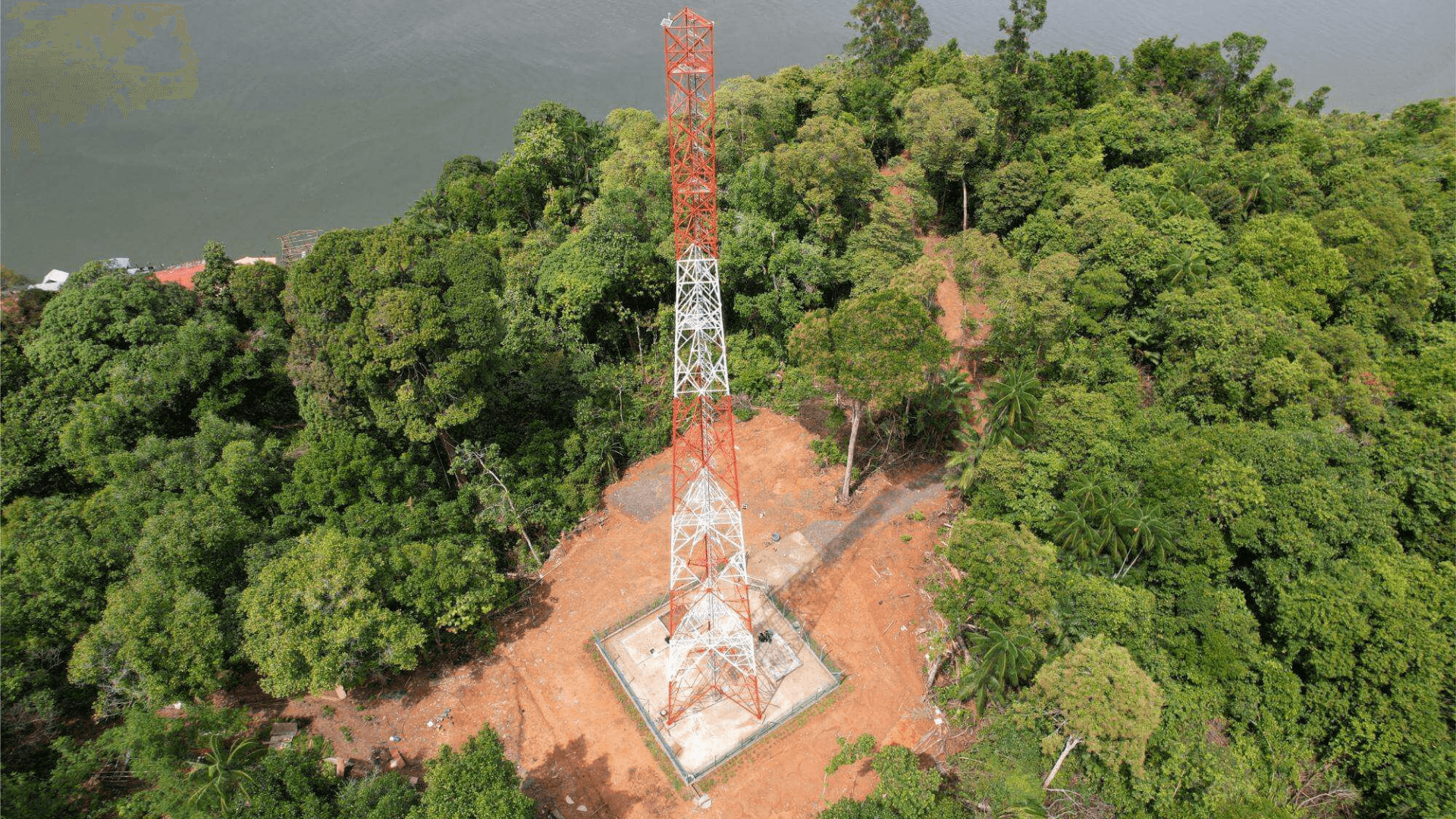
The way towers have been built for generations reflects an era when climate considerations were secondary to speed and cost. Cement and steel enabled networks to scale rapidly, but their environmental footprint is now impossible to ignore. Traditional tower materials like cement and steel are carbon-intensive, prompting the need for sustainable alternatives.
This is why the industry must adapt. A sustainable future depends on new methods, new materials, and new mindsets that allow growth without sacrificing the planet’s well-being.
For EDOTCO, this realisation became the starting point for change. The company began re-examining every element of tower design, from materials and sourcing to end-of-life management with a clear goal, to decarbonise infrastructure without sacrificing reliability or strength.
Turning Waste into Value
The answer begins in Malaysia’s Kelantan state, where palm plantations dominate the landscape. Alongside them, piles of palm residues are often left unused, sometimes discarded, or burned, contributing to waste and environmental pollution.
EDOTCO saw potential where others saw waste. Through a thermochemical process known as pyrolysis and in some cases gasification, these palm residues are converted into biochar, a carbon-rich, highly stable material that traps carbon within its structure, preventing its release into the atmosphere.
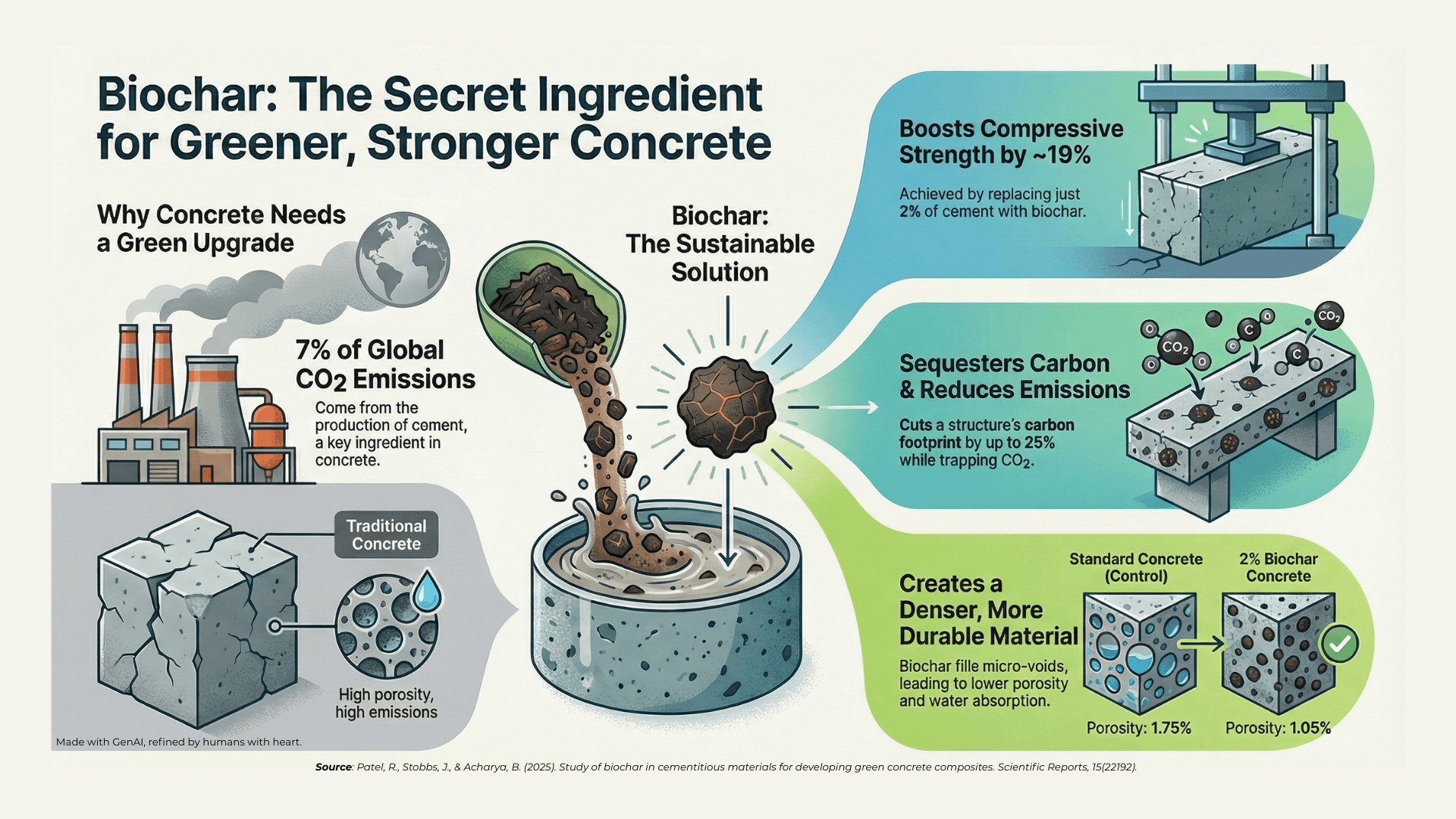
Each kilogram of biochar can sequester up to 2.5 kilograms of CO₂, according to data, which confirms the material’s potential for long-term carbon storage. When blended with ground granulated blast furnace slag (GGBS), a byproduct of steel manufacturing, the biochar-based mixture offers a powerful dual benefit: reducing reliance on cement while improving structural performance.
Laboratory tests show that replacing 5% of cement with biochar can enhance compressive strength by around 15%, while reducing embodied carbon emissions by 10–15% compared to conventional concrete poles.
At scale, this translates to an estimated 25% reduction in emissions per Biochar Pole, equivalent to approximately 420 kilograms of CO₂e saved per structure. To put that in context: one kilometre of overhead lines built using Biochar Poles could save roughly 1,183 kilograms of CO₂ — the same amount emitted by burning 440 litres of diesel.
This innovation demonstrates that sustainability can be rooted in science and practicality, transforming an agricultural byproduct into a low-carbon building material fit for modern infrastructure.
The First Biochar Pole: A Malaysian Milestone
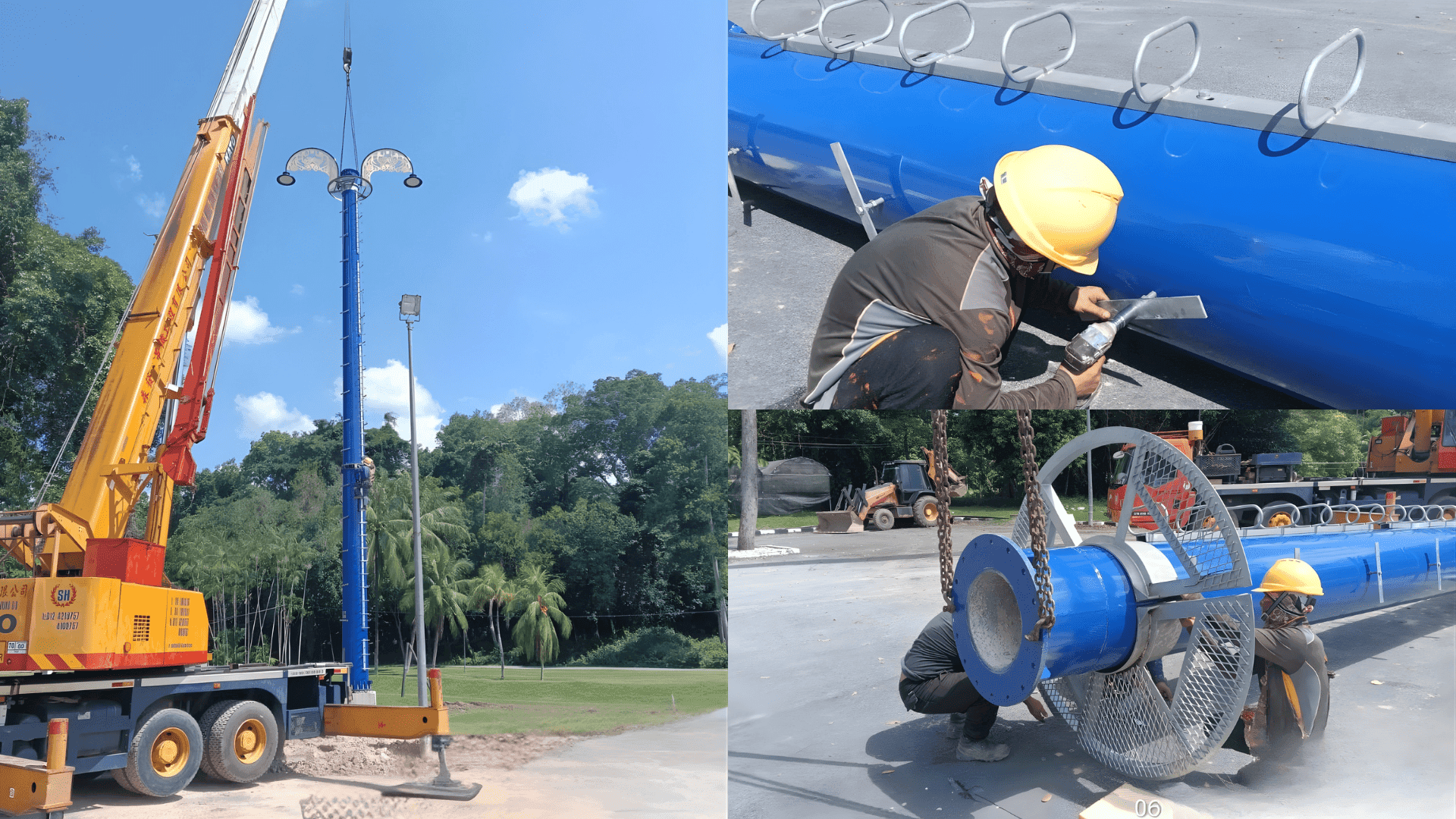
While the biochar material is derived from palm residues sourced in Kelantan and fabricated in Perak, the first Biochar Pole will be installed in Kedah, marking a milestone not only for EDOTCO Malaysia but also for Yiked Bina, as we drive Malaysia toward sustainable infrastructure. Erected to serve Maxis, one of EDOTCO’s anchor clients in the region, the site demonstrates how industry collaboration can turn innovation into implementation.
This inaugural installation stands as proof of concept: a locally sourced, low-carbon alternative that performs at par with traditional concrete poles while contributing to real emission reductions.
“The Biochar Pole is a tangible outcome of our commitment to responsible innovation,” said Datin Azzahraa Annuar, Director of Governance, Risk & Compliance at EDOTCO Group.
“It shows how sustainability can be embedded into our core business, not as a separate agenda, but as part of how we design, build, and operate. By aligning technology, governance, and local collaboration, we’re demonstrating that low-carbon infrastructure is achievable right here in Malaysia,” she added.
From Palm Waste to Local Impact
What makes the Biochar Pole significant is not only its environmental potential but also its connection to Malaysia’s local communities. By transforming palm residues into a construction material, EDOTCO is rethinking how agricultural waste can be managed more sustainably.
While the long-term economic effects are still being studied, the initiative opens up possibilities for farmers and local communities to benefit in the future if this approach scales. At the same time, manufacturing and installation are carried out locally, which helps retain skills and capabilities within Malaysia.
The Biochar Pole is an early example of how sustainability can move beyond global pledges into practical action on the ground. Its real value lies in showing that climate-conscious innovation can begin close to home, with solutions that may one day support both environmental goals and community well-being.
A Step Towards Carbon Neutrality
The Biochar Pole is not an isolated initiative. It is part of EDOTCO’s wider journey to achieve carbon neutrality across all its National Tower Companies by 2030. This goal reflects a commitment to integrate sustainability across every aspect of operations, from energy choices and tower design to materials and community engagement.
The road to carbon neutrality will not be achieved through one solution alone. It requires a combination of renewable energy adoption, energy-efficient designs, sustainable construction practices, and local partnerships. The Biochar Pole represents one key step in this direction, proving that innovation in materials can significantly reduce emissions while delivering local value.
Datin Azzahraa Annuar highlights that achieving carbon neutrality requires more than offsets; it begins with rethinking how we design, build, and operate. The Biochar Pole shows how governance and innovation can work together to unlock meaningful impact.
As EDOTCO continues to roll out sustainable initiatives across the region, the Biochar Pole will stand as both a symbol and a practical example of what it means to align connectivity with climate action.
More Than a Tower
At its core, the Biochar Pole is more than a new kind of tower. It represents a promise that EDOTCO will continue to innovate not only for better connectivity but also for stronger communities and a healthier planet. It is also a promise that local solutions can create a global impact, and that progress and responsibility can go hand in hand.
Every tower built should stand for more than just a connection. It should stand for people, for progress, and for the planet. The inauguration of the Biochar Pole brings that vision closer to reality. As digital demand continues to grow across Asia, EDOTCO’s commitment remains clear: to shape a world where connectivity enables opportunity without leaving a heavy footprint behind.
##END##
Written by
EDOTCO Editorial