
EDOTCO’s First Electric Vehicles Fleet: Driving the Future of Sustainable Connectivity
In summary: In 2025, EDOTCO put its first two electric vehicles into daily use for field teams in Klang Valley, who travel 150–200 km a day.
In the race to build the networks that power our digital world, one truth is becoming clear: connectivity must grow, but it must also grow responsibly. As countries across Asia accelerate digital transformation, the backbone of this progress needs to evolve in ways that are innovative, efficient, and sustainable.
For EDOTCO Group, a leading integrated telecommunications infrastructure services company operating in eight countries, this responsibility is central to its strategy. It sits at the heart of the company’s Decarbonisation Plan, a roadmap designed to achieve Carbon Neutral by 2030.
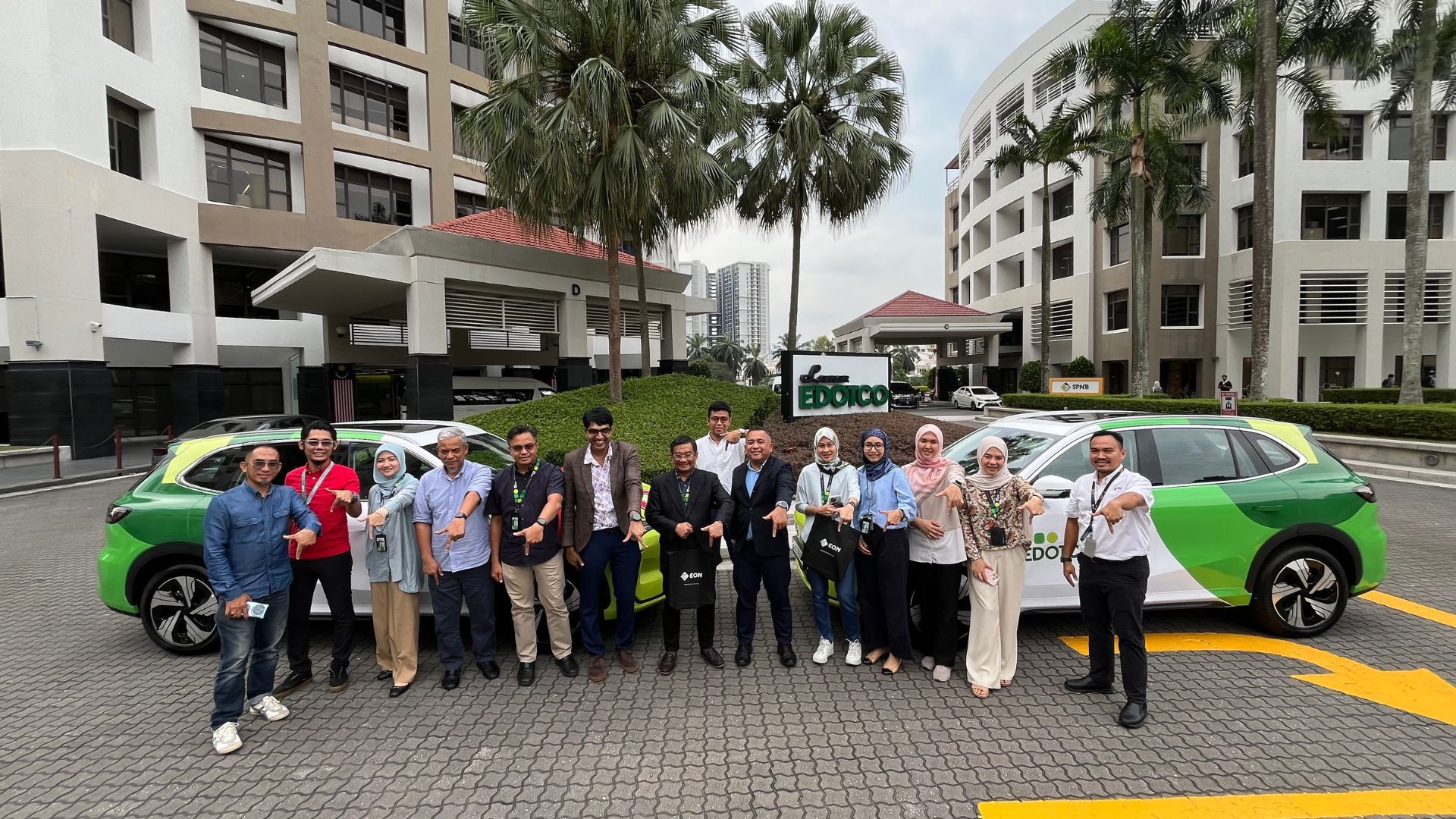
And in 2025, one of the most visible signs of that shift has arrived: EDOTCO has deployed its first electric vehicles (EVs) into daily fleet operations.
A Pilot That Signals a Larger Transformation
The initiative may begin with just two converted Internal Combustion Engine (ICE) cars, but its implications reach far beyond the number of vehicles. These EVs are now part of EDOTCO’s frontline, supporting field operations teams responsible for maintaining towers, responding to outages, and ensuring uninterrupted connectivity.
Every day, these teams travel across Klang Valley, often covering between 150 and 200 kilometers. Until now, that work has relied heavily on petrol and diesel-powered vehicles. By integrating EVs, EDOTCO is demonstrating that sustainability is not an abstract corporate goal, but something woven into the daily mechanics of how networks are kept alive.
Choosing Klang Valley for the pilot reflects a pragmatic approach. EV adoption in emerging markets is still constrained by charging infrastructure, and Malaysia’s capital region has the country’s most advanced ecosystem. Starting here, EDOTCO can test feasibility under real operating conditions, identify challenges, and capture insights to guide expansion across its regional footprint.

Fleet Emissions: Tackling Scope 1 at the Source
Transport emissions are one of EDOTCO’s largest environmental challenges. In 2024, Scope 1 emissions, which come from company-owned vehicles and fuel consumption, accounted for more than 70 percent of the company’s combined Scope 1 and Scope 2 footprint.
With a fleet of roughly 350 vehicles, including 160 in Malaysia, the opportunity to decarbonise operations is clear. Offsetting alone will not suffice. The EV pilot is the first step in addressing emissions at their source, building a pathway to reduce the company’s overall footprint while also aligning with national decarbonisation strategies in the markets where EDOTCO operates.
Choosing the Right Vehicle for the Job

For EVs to succeed in field operations, reliability is non-negotiable. The chosen model, the Proton e.MAS 7 Premium, was selected with this in mind. Its 410 km range per charge (WLTP) exceeds operational requirements, giving teams confidence to complete full-day assignments without interruptions.
The vehicle’s 100 kW DC fast-charging capability restores 30 to 80 percent of its capacity in about 20 minutes, ensuring quick turnarounds even under demanding schedules. Its cargo capacity of 461 liters, expandable to 1,877 liters, supports the transport of tools and equipment essential for fieldwork.
Less obvious but equally strategic is its built-in connectivity. With five years of unlimited internet data, the e.MAS 7 enables real-time tracking, communication, and reporting. For field teams that depend on speed and accuracy, this feature strengthens productivity and reduces downtime.
The Economic and Environmental Case
Sustainability efforts must be backed by sound economics, and EVs deliver on both fronts. Compared to diesel vehicles, they require far less maintenance, with fewer moving parts and no engine oil. This translates into reduced servicing costs and greater uptime. Long-term risks are further cushioned by Proton’s six-year unlimited mileage warranty and eight-year or 160,000 km battery warranty.
Environmentally, the impact is measurable. Over a seven-year lifecycle, just two EVs are expected to reduce nearly 9.6 metric tons of CO2. While modest against EDOTCO’s total footprint, this is an important proof of concept. More importantly, it signals the direction of travel: a fleet that can significantly shrink its Scope 1 emissions as adoption scales.
Supporting National and Regional Sustainability Goals

This pilot is not just about company targets; it aligns with broader policy frameworks. In Malaysia, the National Energy Transition Roadmap (NETR) calls for cleaner transport and reduced fossil fuel dependence. By adopting EVs, EDOTCO is actively contributing to these national ambitions while setting an example for other industries with large vehicle fleets.
Across the region, EDOTCO has long sought to balance growth with sustainability. In Bangladesh, it pioneered bamboo towers as a renewable alternative to steel. Across Cambodia, Sri Lanka, and the Philippines, it has invested in solar and hybrid energy solutions to power infrastructure more responsibly. The EV pilot is the latest step in this broader journey, reinforcing EDOTCO’s role as a leader in sustainable digital infrastructure development.
For EDOTCO’s field engineers, the vehicles they drive are more than transport. They are extensions of their responsibility to keep people connected. Transitioning to EVs underscores a powerful message: sustainability is everyone’s business, from leadership to field teams.
It also marks a cultural shift within the organization. Achieving Carbon Neutral by 2030 will require more than technology. It demands a mindset that places sustainability at the center of everyday decisions. This initiative brings that philosophy to life in a tangible, visible way.
Driving the Future, Responsibly
The deployment of two EVs in Klang Valley is a first step, but the ambition is larger. With a fleet of 350 vehicles across eight markets, the potential for transformation is significant. Each country will present its own challenges, from infrastructure gaps to regulatory environments, but the pilot will provide the operational data needed to guide expansion.
The move to EVs may be small in scale today, but it represents a milestone in EDOTCO’s sustainability journey. It transforms decarbonisation commitments from words on a page into wheels on the ground. It proves that climate action is not separate from operations but embedded in the everyday task of keeping millions connected.
As Asia pushes forward with green mobility and industries confront their role in the climate transition, EDOTCO is showing what leadership looks like. Practicality. Ambitious. Grounded in real operations.
The road to a sustainable future is not just paved with policies and promises. It is driven by action. For EDOTCO, that road is now being traveled by electric vehicles.
Learn more about EDOTCO’s Sustainability Journey here.
##END##
Written by
EDOTCO Editorial