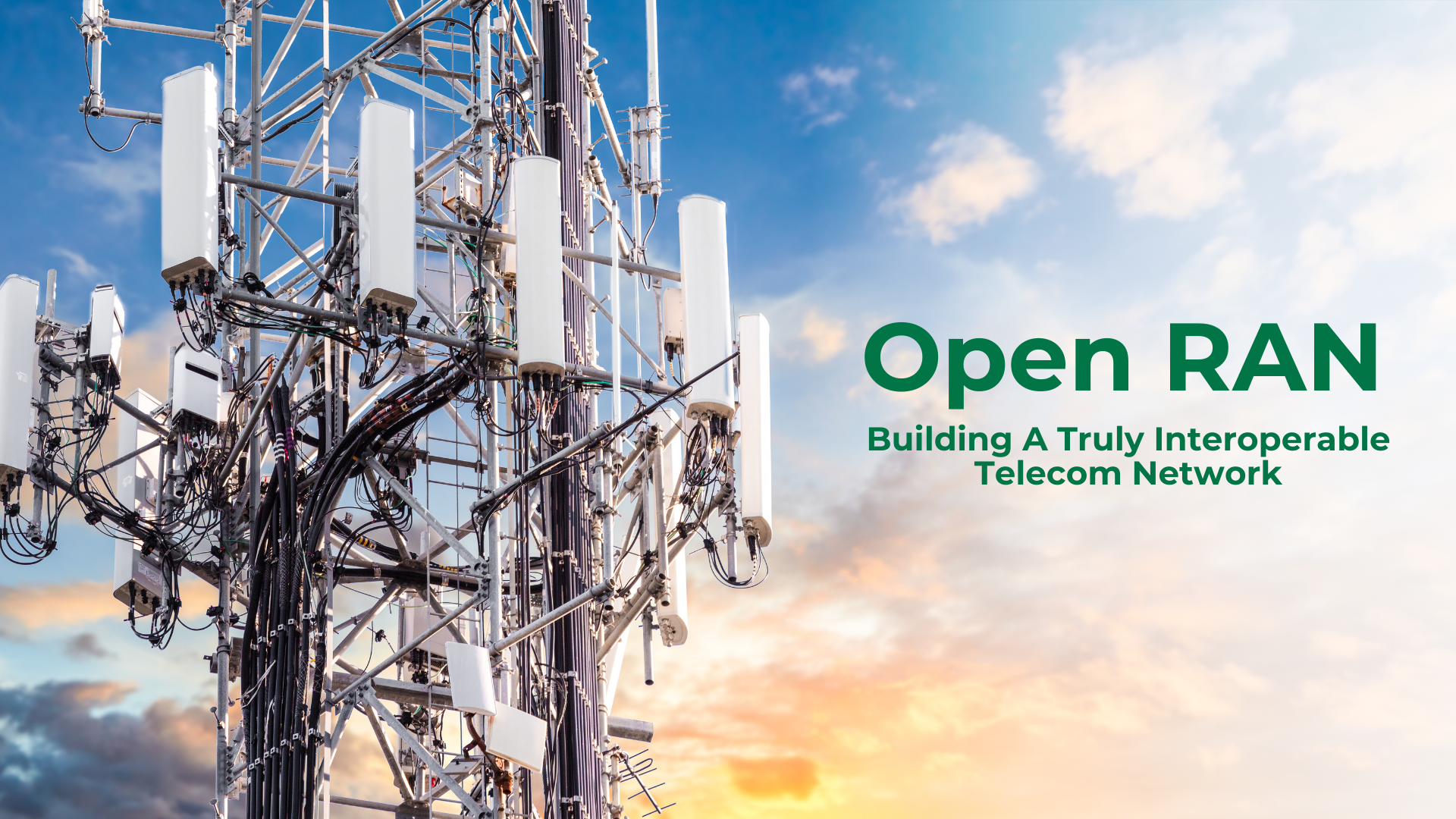
Are we ready for the "uberization" of the mobile network? A layman’s guide to Open RAN
Gayan Koralage - First Published on 22 Sept 2020, updated on 29 Jan 2024
Imagine a world where the mobile network's radio access is community-owned? A plug-n-play by the consumer themself? Meaning, you and I could buy a radio access box online, install it in our houses DIY, plug into the internet port, and onwards contribute to the "national data grid" by collecting the data traffic near our house and in exchange trade that with my own usage with the mobile operator.
Let’s call this "uberisation" or "democratization" of the mobile networks
For over 35 years, all telecom structures – big or small, smart or not – had to be equipped with complex, highly specialized equipment to communicate with the rest of the network. Active equipment manufacturers use custom silicon in routing systems and optimise the software around it. Today, however, merchant or “off the shelf” silicon is being used to build a new category of bare-metal switches, at a fraction of the cost of conventional telco routers, but just as powerful. New companies are providing routing software that turns these bare-metal switches into routers, often specialising in broadband access, edge, core and other areas of the network. Now MNOs and ISPs have the opportunity to mix and match hardware and software vendors, fostering innovation and efficiency.
Open RAN is not new. It started in remote rural areas, which is geographically the most challenging terrain for MNOs and their partners to address – low user penetration, low ARPU, and non-existent site and backhaul infrastructure.
Open RAN has become the rage now, only because the telecom industry’s cost problem can no longer be ignored. Post-COVID19, MNOs are reporting lower roaming, voice, and interconnect revenues. However, capex for network enhancements continues to rise, due to growing data demand.
The above was caused by new trends worldwide from the population being locked down earlier this year:
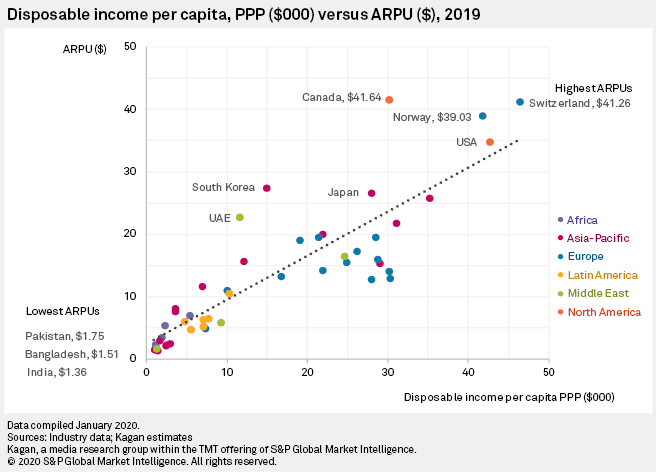
Comparing the disposable income per capita metric (adjusted for purchasing power parity across markets) with ARPU reveals a positive correlation: markets with lower disposable income per capita have lower mobile ARPUs (see image 1).
As data demand grows and disposable income falls /poised to fall further post-COVID, the need to optimize network cost will grow. Active equipment represents 60% of the total cost of a mobile network over 10 year period. Passive network elements such as tower, power and fiber represent only 40% of the cost. MNOs can lower network cost by the purchase of network software separately from their hardware. To reduce manufacturing cost per GB, there is an emerging need for such manufacturer-agnostic, plug-and-play network solution.
Solution: Enter Open RAN, to uberize the mobile network
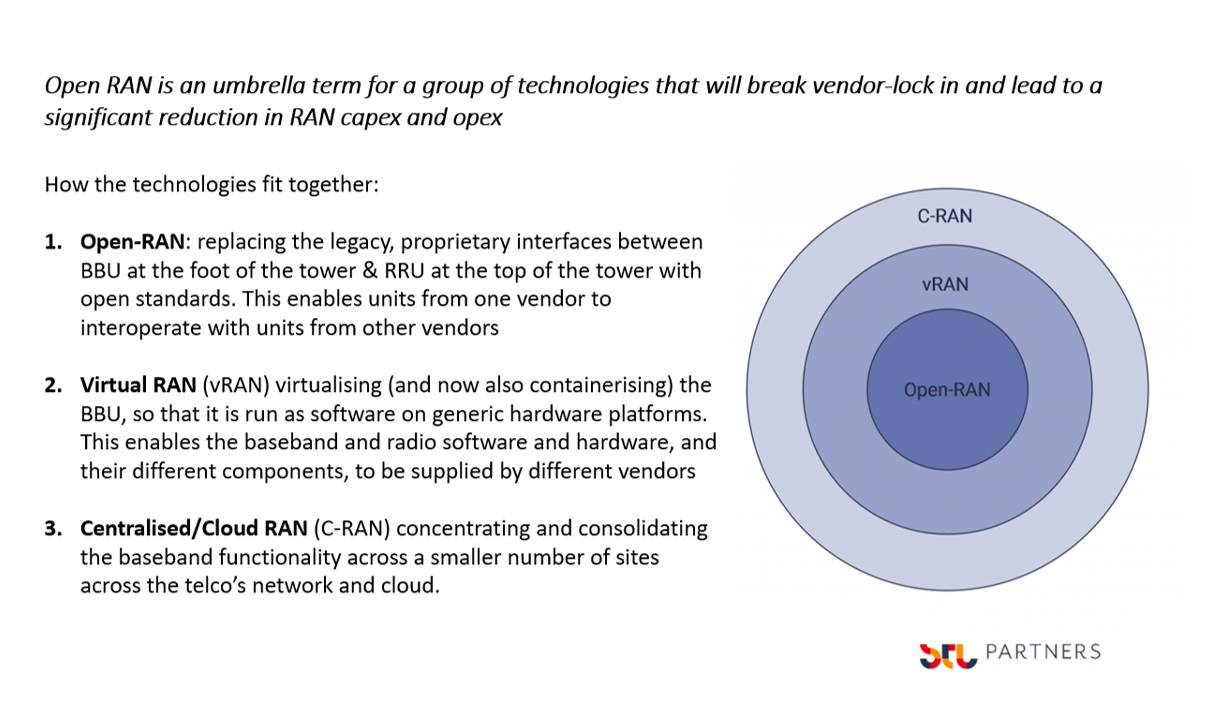
Open RAN or software-defined mobile network is an approach to standardization of the design of mobile networks so that it is protocol-agnostic, upgrades being software-only, and open across technology generations. It includes several kinds of technologies that will break vendor-lock in (see image 2).
What if mobile network elements could be bought online say eBay in small boxes, cash and carry to the home, owned by residents and/or private property owners, with DIY installation instructions on balconies? What if you as a resident could collect 100GB data traffic a month near your residence i.e. contribute to the national data grid, and pay for the electricity, in exchange for 30GB a month from the operator? That is how Open RAN will disrupt mobile telecom networks, and how the mobile network will enter the “shared economy,” alongside ride-hailing services, shared rooms, gig outsourcing, and others.
What are industry approaches to the solution?
MNOs, their partners, research and academic institutions operating in the RAN industry have formed various initiatives including:
In February 2020, O-RAN and TIP’s OpenRAN Project reached a new level of collaboration for open RAN. The liaison allows for sharing information, referencing specifications and conducting joint testing and integration efforts, in the move towards interoperability.
The case to open up the RAN for all Gs
4G and 5G-only OpenRAN approach is only suited for greenfield deployments. The only such networks today are DISH and Rakuten; while the other deployments under TIP can be referred in image below. The obvious benefits are OpenRAN allows the MNOs to future-proof their investment; a software-enabled network makes it easier to upgrade and scale their new networks, without reliance on a single vendor, thereby reducing cost.
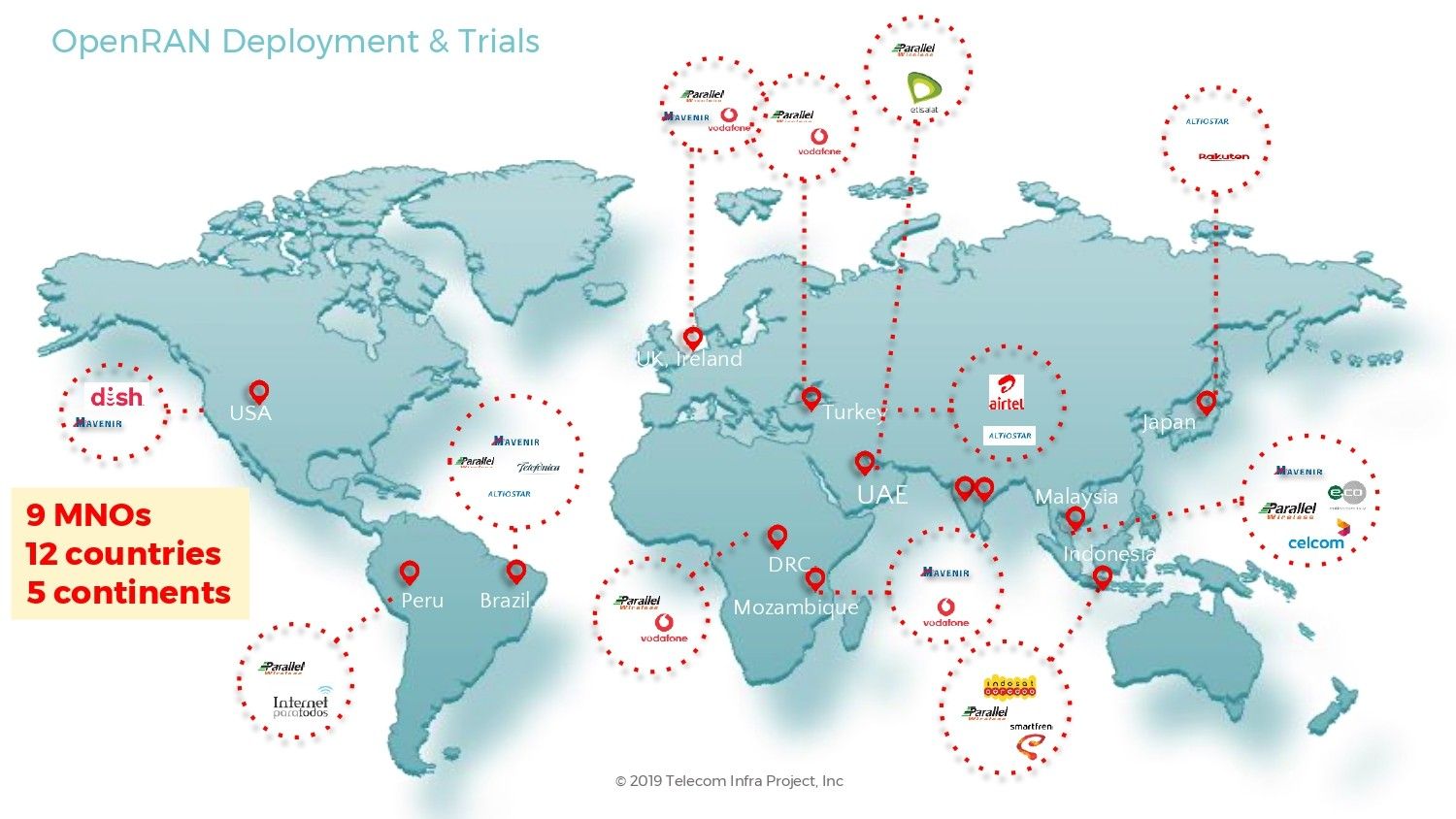
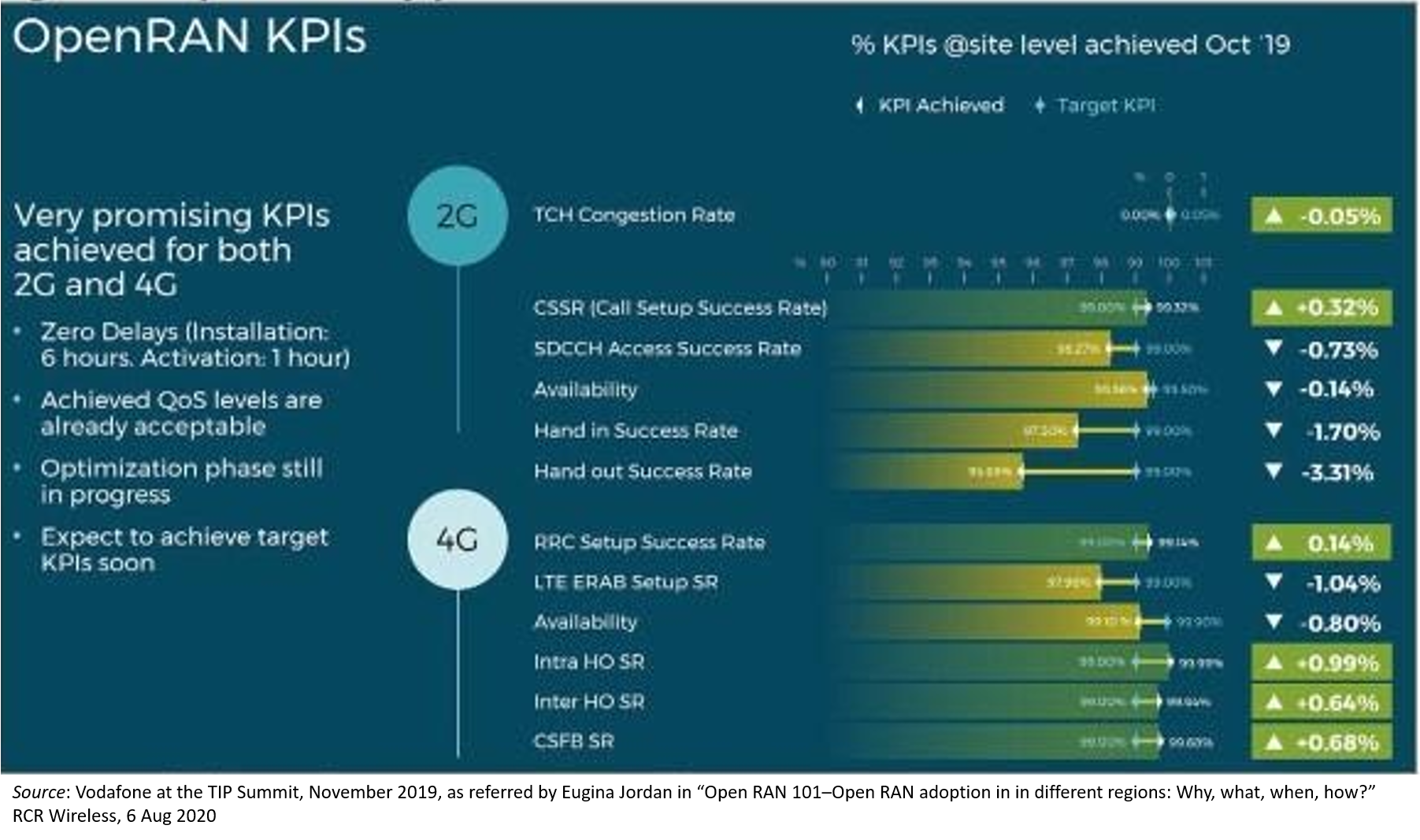
As mobile phones compliant with legacy 2G and 3G tend to be used more in APAC, MNOs require a solution that can support both 2G and 3G solutions while simultaneously preparing for the deployment of faster 4G and 5G networks. Vodafone has been steadily expanding its 2G, 4G networks with Open RAN (see image 3), proving that open RAN is a strong contender for any RAN replacements if it addresses ALL Gs.
The mobile industry is at the same crossroad that faced the IT industry during the 1990s’ dot-com boom, and before internet-based companies turned the market upside down. The IT enterprise businesses that saw the value of software-centric approach and transitioned to more open models, with competing software partners fostered innovation, flexibility and efficiency.
Open RAN can help meet end goal of optimizing the mobile network cost and to improve network economics via vendor-neutral hardware/ software design. MNOs that embrace open RAN will accelerate innovation and unlock new network efficiencies, enabling them to simplify the process of network coverage extension and technology sustainability. This is an innovative industry collaboration in action, in industry commitment to enable seamless connectivity.
Related Posts




- Laman EDOTCO
- Block D, Dataran PHB
- Saujana Resort, Section U2
- 40150 Shah Alam, Selangor, Malaysia
- Tel: +6 03 2779 2699
- Hotline (WhatsApp): +6 019 372 1840
- Hotline (Office): +6 03 7890 5850
- Email: oc@edotcogroup.com

EDOTCO Group Sdn Bhd
(1022843-U)
For any towers or tenancy-related queries
related query, kindly contact:



© 2026 EDOTCO Group Sdn Bhd (1022843-U). ALL RIGHTS RESERVED.