EDOTCO Group Engineering Climate Action Where Connectivity Matters Mos
In summary: EDOTCO Group and Universiti Kebangsaan Malaysia (UKM) won the Forward Faster Sustainability Award 2026 for Climate Action. Their battery system cut diesel use at towers off the grid. One site used 1,593.9 litres less a month.
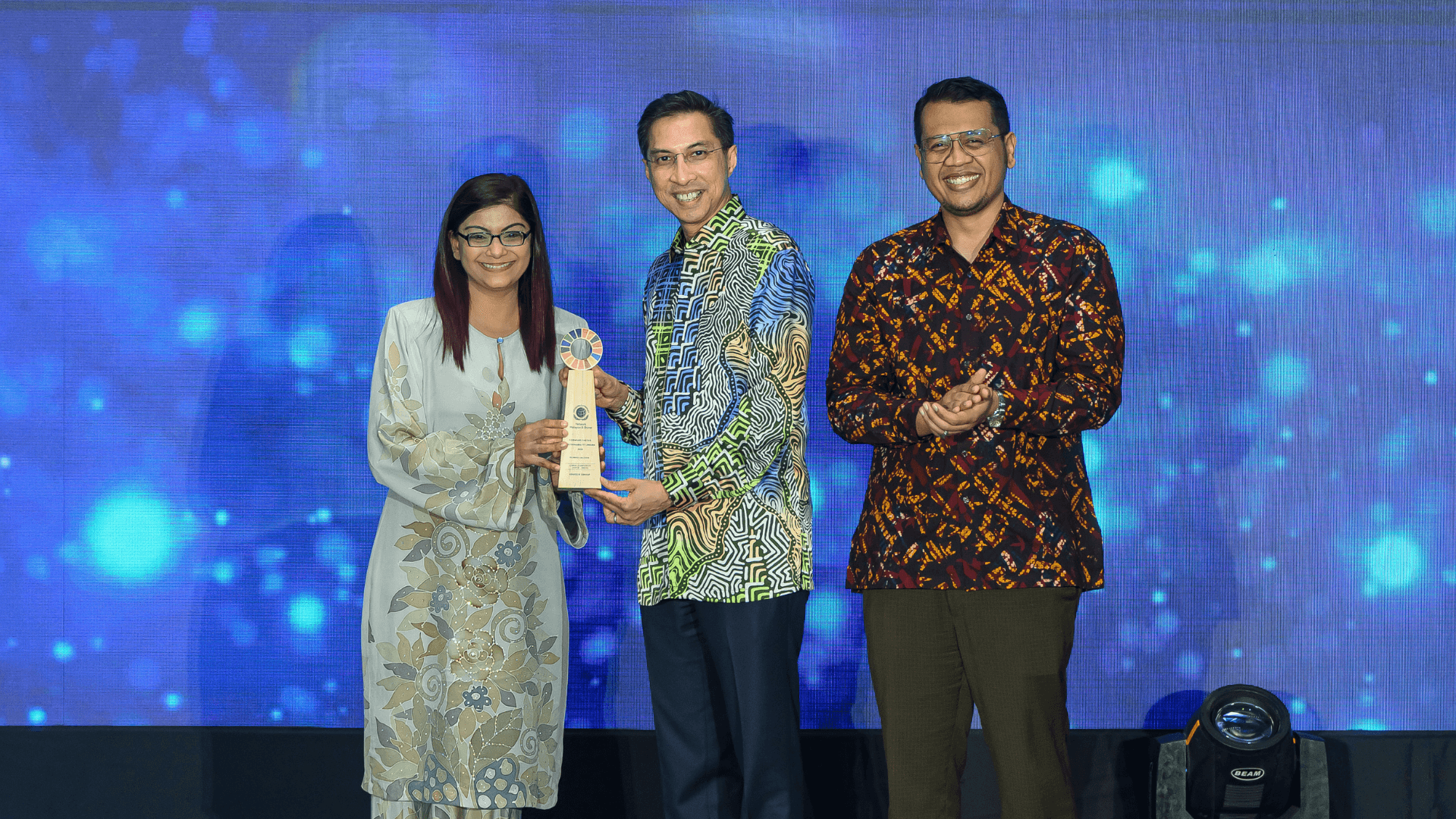
EDOTCO Group has been awarded the Forward Faster Sustainability Award 2026 under Climate Action category for a joint initiative with Universiti Kebangsaan Malaysia (UKM) that is transforming how remote telecommunication towers are powered.
The project introduced the integration of hybrid Battery Energy Storage System (BESS) across live off-grid sites, proving that intelligent energy management can sharply reduce diesel use while keeping networks dependable. The system was developed and deployed under the technical leadership of Muhammad Syahir Rozalee and Nor Fatina Raduwan, Engineers, Tower & Energy Operations at EDOTCO, who worked alongside UKM researchers to validate performance using raw operational data on genset runtime, charge–discharge behaviour, and site demand.
The Unseen Cost of Staying Connected
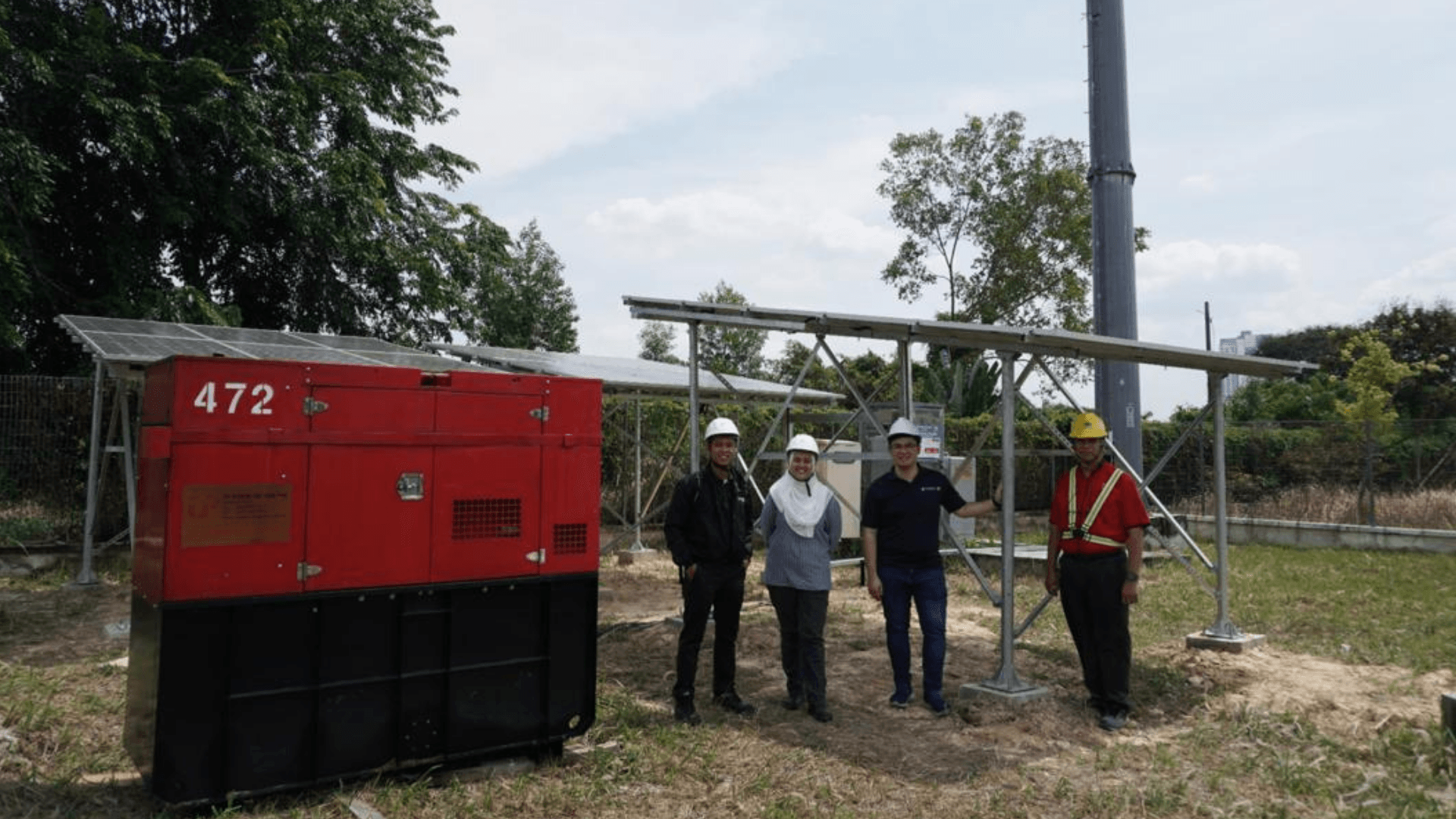
Across Malaysia, dozens of towers operate far from the national grid. These sites keep rural communities linked to digital services, yet they have long depended on diesel generators (gensets) that were never designed for constant low-load operation.
When gensets run below their optimal range, fuel efficiency falls, emissions rise, and engines suffer from a condition known as wet stacking, which is unburned fuel that shortens equipment life and increases maintenance burdens.
Beyond maintenance issues, diesel generation carries an unavoidable climate cost. Every litre of fuel burned releases carbon dioxide directly at the tower site, along with other pollutants. Unlike grid electricity, where cleaner sources can be blended over time, a standalone genset produces the same exhaust year after year.
For EDOTCO, the challenge was practical rather than theoretical: how to keep these essential towers reliable without locking communities into permanent on-site emissions
Designing from Real Tower Behaviour
Instead of beginning with assumptions, Fatina and the joint team began with telemetry from the towers themselves. A proof-of-concept was launched at four locations; PandanSafari, UKM R&D, Kem Gemas 3, and RAMO TNB Ulu Jelai, each previously powered by twin 20 kVA gensets.
The hybrid architecture they implemented allows the battery to carry the site during periods of low demand, switching the genset only when necessary to recharge the battery and support higher loads. By keeping the genset within its efficient operating window, the system avoids the wasteful patterns that had defined off-grid power for years.
“Every site has an incredibly dynamic load profile that changes dramatically from day to night. The goal was simple, let battery do the quiet work and engaging the genset only when it can run at its best. That single change reshapes cost, emissions, and reliability at the same time,” said Fatina.
How Hybrid Power Cuts Carbon
The climate impact comes from a fundamental shift in where electricity is created. For much of the day, the tower now runs on stored renewable energy with zero on-site emissions, rather than continuous diesel combustion. The generator becomes a backup instead of the default power source. When it does operate, it runs in short, efficient cycles, producing less CO₂ per unit of electricity than a machine idling around the clock.
This change breaks the direct link between connectivity growth and rising emissions. Each hour moved from genset to battery is an hour where carbon is simply not produced.
Results proven on the ground
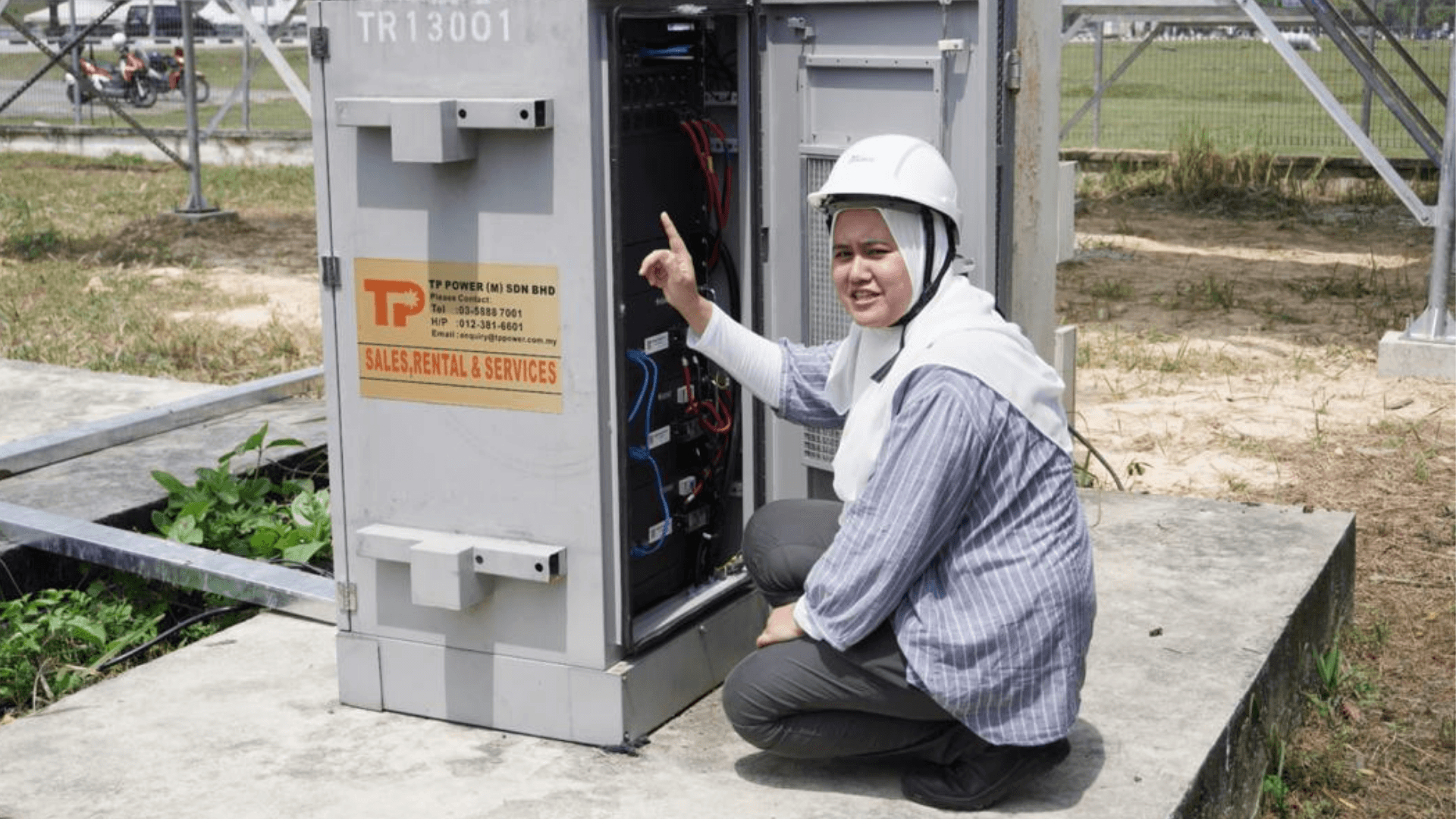
Data collected over several months compared the hybrid system with a genset-only baseline. The difference was immediate. At PandanSafari, monthly diesel consumption fell by 1,593.9 litres, while the UKM R&D site recorded a reduction of 1,055.7 litres. Using standard emissions factors, this translated into 4,271.65 kg of CO₂ avoided each month at PandanSafari and 2,829.28 kg at UKM R&D.
Fuel savings carried direct economic impact as well, with thousands of Malaysian Ringgit (MYR) preserved monthly at each location. Just as significant was what the numbers implied operationally: shorter genset runtimes, fewer maintenance visits into difficult terrain, and longer equipment life.
Battery profiles showed the towers running predominantly on stored energy for more than half the day, confirming that battery-buffered energy has successfully replaced the genset as the default power source, relegating diesel to a secondary, supportive role.
The benefits reach further than equipment rooms. In villages served by these sites, clinics can stay online during storms; students join evening classes without interruptions, and small businesses accept digital payments with confidence. Cleaner power also means quieter surroundings and better air quality for families living near tower compounds.
Sustainability becomes tangible when it strengthens daily life rather than competing with it.
What’s Next?
The study recommends continuous refinement of the energy management system, deeper use of remote monitoring, and careful sizing as demand evolves, positioning EDOTCO to participate in emerging carbon markets.
Each new deployment removes another stretch of diesel dependency and replaces it with an approach shaped by data, engineering discipline, and partnership.
This award is not a finish line. It is evidence that telecommunications can grow responsibly, connecting more people while asking less from the planet.
To read the full study, click here.
##END##
Written by
EDOTCO Editorial